National Conference

June 23rd – 25th, 2027


NAFTO is proud to offer some outstanding training at our 2026 3-Day National Conference in San Antonio, TX.  This year’s training is specifically designed for Field Trainers working in Patrol, Detention, Communications, and Emergency Medicine. NAFTO is working to prepare your Field Training Unit for the challenges of 21st Century Policing by providing a comprehensive and client-oriented curriculum. This year, NAFTO presents course topics including Constitutional Policing, 21st Century Policing, Communication, Remedial Training, Standardization, Interpersonal Skills, Emotional Intelligence, Instructor Development, Reducing Liability, Program Defensibility, Resilience, Leadership, Instructional strategies, Problem Solving, and Retention. Specific speaker and topic details will be added soon.

NAFTO is proud to offer some outstanding training at our 2027 3-Day National Conference in Oklahoma City, OK.

More information coming soon!

Registration

There is a 3 tiered registration calendar this year. This fee includes a 1-year NAFTO membership/renewal, 3 breakfasts, and 3 hot catered lunches. Questions can be e-mailed to director@nafto.org

Important Dates:

Registration Deadline: May 29, 2026 (limited to first 200 applicants)
Early Check-in: Tuesday, June 16 at 1700 hours (2nd floor event space)
Application Deadline for Master FTO & FTO of the Year: April 15, 2026

Registration Tiers Dates NAFTO Members Non-NAFTO Members
Early Bird Registration
10/01/25 – 01/31/26
$470
$495
Regular Registration
02/01/26 – 04/30/25
$525
$550
Late Registration
05/01/26 – 05/31/26
$570
$595

REGISTRATION TBA. 

Lodging

LODGING IS THE RESPONSIBILITY OF THE ATTENDEES.


More information coming soon!

Location:

Omni Oklahoma City Hotel

100 West Oklahoma City Blvd, Oklahoma City, OK 73109


Questions can be e-mailed to training@nafto.org

What to Expect

Justin Witt’s Banquet Speech at the 2022 Conference

Meet Your Instructors

Guest Speakers

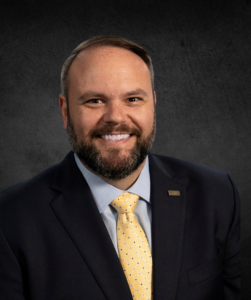
David Snively

Dr. David T. Snively is a nationally recognized policing scholar-practitioner specializing in policing research, policy, leadership, and training. He has worked in public safety since 2007, beginning as a 911 dispatcher and advancing to Interim Chief of Police. Throughout his career, he has held supervisory and functional roles in patrol, investigations, traffic and DUI enforcement, recruiting, professional standards, media relations, and training.


Dr. Snively currently serves as Director of Criminal Justice Policy and Leadership Innovation at Georgia State University’s Andrew Young School of Policy Studies and as a Senior Advisor to the International Association of Chiefs of Police, where he oversees the Center for Police Research and Policy. He is a National Institute of Justice LEADS Scholar, an IADLEST National Instructor, and a Georgia P.O.S.T. Master Instructor, with additional specialty certifications in firearms, use of force, TASER, and duty to intervene. He is also a graduate of several executive law enforcement leadership programs and remains an active sworn police officer in the metro-Atlanta region.

General Session Guest Speakers

Anthony Bandiero — Blue to Gold

Jim GlennonCalibre Press

Von KliemForce Science

Anthony Bandiero : Teaching Trainees How to Make Good Case Law

     Every police contact is a potential court opinion waiting to happen. The question is whether it becomes good case law or bad case law.

     This session is designed for field training officers, supervisors, and instructors who want to teach trainees how to make legally sound decisions that hold up in court and reduce liability. Rather than memorizing case names, attendees will learn how to train officers to think in terms courts actually use: reasonableness, totality of the circumstances, probabilities rather than possibilities, and clear articulation of why decisions were made.

     Drawing from real Fourth Amendment case studies, this class focuses on how small decisions during stops, searches, and arrests become the facts judges rely on when shaping the law. Attendees will learn how to coach trainees to slow down decision-making, recognize legal thresholds as they develop, and document facts in a way that allows judges, prosecutors, and juries to “see what the officer saw.” When officers understand how courts evaluate searches, seizures, consent, and use of force, they are better equipped to make decisions that protect both the case and the officer.

     By the end of this session, attendees will walk away with practical teaching strategies they can immediately use in the field to help trainees build strong cases, avoid suppression issues, and contribute to good law rather than becoming the next cautionary citation.

     Jim Glennon is a nationally recognized instructor, speaker, author and training consultant who is widely known for his expertise in law enforcement leadership, officer safety, and real-world effective communication skills. For 30 years he served with the Lombard (IL) Police Department where he retired at the rank of Lieutenant. During his tenure, Jim was appointed the first Commander of Investigations in 1998 for the newly formed DuPage County Major Crimes (Homicide) Task Force, where he was responsible for leading an elite unit of more than 30 detectives from 16 Chicago-area law enforcement agencies.

     Jim has a B.A. in Psychology and a Master’s degree in Police Management. He is a graduate of Northwestern University’s Staff and Command College where he was elected class president. At graduation he was presented with the highly prestigious Franklin M. Kreml Award which is given to the student who “best displays the dedication, devotion, ethics, sense of justice and other attributes that exemplify the kind of leadership that is needed in today’s law enforcement community.”

     Jim and his world class team of highly experienced instructors conduct more than 200 seminars every year in over 15 topics across the country. In addition to a continued focus on officer safety and survival, Calibre training has advanced into a wide variety of new and timely areas of focus including leadership, communication, implicit bias, deescalation, the science of human performance, active shooter events, mental conditioning, procedural justice, probation/parole, corrections and three courses created by, and presented for, women in law enforcement.

Adult Learning Track Instructor

Lon BartelVirtra

     Lon Bartel, PhD. is a law enforcement researcher, instructor, and former police officer with over two decades of operational and training experience. He currently serves as Principal Researcher for VirTra and is the former Director of Training and Curriculum, where he led the development of nationally certified training programs and high-fidelity simulation content grounded in human performance science. Lon is a Force Science Adjunct Instructor and certified Use-of-Force Analyst with over 350 hours of advanced training in human factors, perception-response time, and force investigations. He has developed more than 90 hours of curriculum certified through the IADLEST National Certification Program and received innovation recognition for pioneering simulation-based and immersive 3D training courses. A former SWAT senior operator, rangemaster, and POST subject matter expert in firearms and arrest/control tactics, Lon integrates operational experience with academic study. He holds a master’s degree in Sport Science (Performance Enhancement) and a Ph.D. in Performance Psychology.
Focus
Understanding how adults learn in high-liability professions.
Description
This session introduces andragogical principles and demonstrates how adult learning science directly impacts retention and transfer in police training. Participants explore why passive shadowing and checklist-based supervision fail to produce durable skill acquisition.
Key Concepts
·         Self-directed learning
·         Experience as a resource
·         Problem-centered instruction
·         Readiness and internal motivation
·         Retention vs. transfer in high-stress environments
Learning Outcomes
Participants will be able to:
·         Explain how adult learning differs from traditional instruction.
·         Apply retention strategies (spaced repetition, active recall, feedback loops).
·         Apply transfer strategies (varied practice, scenario diversity, reflection).
·         Identify weaknesses in current FTO approaches.
Practical Application
Participants will practice restructuring daily FTO interactions to improve long-term performance outcomes.
Focus
Moving from directive instruction to guided reasoning.
Description
This session introduces the Socratic method as a structured mentoring tool for enhancing reasoning, policy articulation, and defensible decision-making.
Rather than telling trainees what to do, FTOs learn how to guide officers toward articulating why they made decisions and how those decisions align with policy, law, and operational reality.
Key Concepts
·         Open-ended inquiry
·         Probing for evidence
·         Clarification and elaboration
·         Exploring consequences
·         Considering alternative perspectives
Learning Outcomes
Participants will be able to:
·         Conduct Socratic micro-debriefs after calls.
·         Improve articulation of tactical reasoning.
·         Enhance policy retention through guided questioning.
·         Develop metacognitive awareness in trainees.
Practical Application
Participants engage in role-play exercises simulating post-incident discussions using structured questioning frameworks.
Focus
Structured after-action reviews that improve performance.
Description
This capstone session introduces a four-question debrief model grounded in adult learning and Socratic dialogue.
The Four Foundational Questions:
1.      What did you know going into the event?
2.      What did you see or hear?
3.      What did you say or do, and why?
4.      If you could do it again, what would you do differently, and why?
Participants learn how this sequence strengthens recall, improves perceptual awareness, builds justification skills, and enhances future adaptability.
Learning Outcomes
Participants will be able to:
·         Conduct structured post-call and post-scenario debriefs.
·         Identify perceptual distortions under stress.
·         Improve long-term retention of policy and tactics.
·         Document training rigor through consistent debrief models.
Practical Application
Participants conduct live mock debriefs and receive guided feedback.

Breakout Session Instructors

Course Description

    This one day, 8-hour program has been designed to provide FTOs instruction on the Gap-Free Narrative© system, to provide them with a methodical and standardized approach to reviewing and assessing report narratives from new officers, before they submit them for approval. Every type of police narrative, from stolen property to homicide, can be reviewed and analyzed with ease when using the Gap-Free Narrative© method properly.

Instructor Bio

     Al is a PhD Candidate in Organizational Conflict Analysis and Resolution, with a focus in Training, and holds a master’s degree from the University of Chicago in Critical Incident Response and Threat Analysis. He is a 21-year veteran of the United State Marine Corps Reserves, during which he spent over 15 years in the infantry, and retired as a Gunnery Sergeant. Al is the creator of the Gap-Free Narrative™ system and Adaptive Leader™ concept among others that Offset specializes in. He has hundreds of hours of proven leadership exposure and brings this drive and concept to all he does. Al is currently a full-time police Commander in a high-crime Chicago-bordering police agency.  He has been a police trainer in multiple disciplines for over 20 years and has been able to vet hundreds of training curriculums.

Course Description

     This course is for anyone involved in training but specifically for the FTO.  The course will allow trainers to draw on previous experience and give them the ability to implement that experience into realistic and relevant training opportunities.

Instructor Bio

     Andrew Blubaugh is a US Marine Corps veteran and continues to work as a police officer in NE Ohio with over 23 years of full time law enforcement service. Andrew has been an instructor, FTO and teacher within the law enforcement community for over 20 years, taking a lead role in firearms, tactics and use of force training. Andrew has had the privilege to serve for 22 years on a county wide SWAT team as a Sniper Team Leader, Entry Team Leader and Assistant Team Commander.

Course Description

     Most cases are lost because of the police report, not because of what the officer actually did. This session focuses on how officers can write reports that support prosecutions and protect against civil liability. Attendees will learn ten practical report writing principles that directly affect suppression hearings, charging decisions, and lawsuits. The emphasis is not on just writing more, but on clearly articulating legally significant facts in a way courts and juries understand.

     Using real-world examples, this class covers how to articulate reasonable suspicion and probable cause, separate facts from conclusions, organize reports logically, and document decisions so the reader can understand why the officer’s actions were reasonable at the time.

     By the end of the session, attendees will leave with immediately usable techniques to improve report quality, strengthen cases, and reduce personal and agency liability

Instructor Bio

     Anthony Bandiero brings a rare combination of real-world policing experience and legal scholarship to the classroom. He began his career as a police officer before earning his Juris Doctor degree, graduating Summa Cum Laude from Gonzaga School of Law. That transition from the street to the courtroom shaped his focus on helping officers clearly understand constitutional law, particularly search and seizure under the Fourth and Fifth Amendments, and how those principles apply in daily law enforcement work.

He currently serves as the CEO and  Senior Legal Instructor with Blue to Gold Law Enforcement Training and as a Search and Seizure Consultant for the Las Vegas Metropolitan Police Department.

Course Description

     Officers are being challenged during traffic stops at an increasing and alarming rate. It is imperative that officers know, apply, and confidently articulate their lawful authority throughout every step of a traffic stop, particularly in light of all the misinformation currently being spread through social media.

     This course will include how to make and articulate legally defensible traffic stops under reasonable suspicion and probable cause. The information in this course is critical to officer success in today’s volatile environment. Many officers are not being trained in some of the most important legal concepts concerning traffic stops and controlling detainees. This course will attempt to correct that issue by providing information that will boost an officer’s success, confidence, and de-escalation skills during traffic stops.

Instructor Bio

     Don McCrea is Founder and President of Premier Police Training and has over 40 years of law enforcement experience. He served nine of those years as a Special Assistant Attorney General and top-rated academy instructor for the South Dakota Division of Criminal Investigation, Law Enforcement Training Section.  While in that position, Don specialized in search and seizure, use of force, scenario-based skills evaluations, development of basic and advanced law enforcement curricula, defensive tactics, firearms, and the use of adult learning strategies.   

     He is currently a national and internationally certified instructor with IADLEST and provides consulting, expert witness, and training services for law enforcement agencies, the U.S. DOJ, COPS office, the Federal Public Defender’s Office, and CRI TAC.  Don is a subject matter expert in non-escalation, de-escalation, duty to intervene, police use of force, force avoidance, and search and seizure. He is also an accomplished author of several law enforcement training books and holds a bachelor’s degree in the biological sciences and a master’s degree in criminal justice, graduating Summa Cum Laude. Don’s teaching skills, knowledge, and dynamic presentations significantly increase officer confidence and effectiveness, reduce agency liability, and build community trust.  

Course Description

     Unethical behavior is the silent killer of police careers, and no one is in a better position to stop it than the Field Training Officer. Honoring the Badge: The Ethical Compass of the FTO is a raw, thought-provoking, and highly relevant session that confronts the real pressures and pitfalls that cause good officers to go bad. Through powerful storytelling, real-world case studies, and practical tools, participants will learn how to identify early warning signs, address ethical drift, and use daily coaching moments to shape integrity and resilience in new officers.

     This isn’t theory. It’s about survival, personal, professional, and organizational. Attendees will leave equipped with strategies they can apply immediately to build stronger officers, healthier teams, and a culture of trust that protects the profession from the inside out.

Instructor Bio

     Jim Dugan’s journey is one of achievement, adversity, and redemption. A former Captain of Detectives and Police Academy Director, Jim’s law enforcement career was marked by early success, and later, a painful fall from grace following an ethical misstep that ended the profession he loved. Determined to rebuild, he spent the next two decades as a senior executive leading corporate teams through transformation, learning firsthand that integrity is the foundation of true leadership and personal wellness.

Now, as Director of the Josephson Exemplary Policing Initiative at Drake University, Jim brings raw honesty and hard-earned wisdom to his nationally acclaimed Honoring the Badge program. His story resonates deeply with officers at every level, reminding them that ethics isn’t just a policy, it’s a lifeline. Jim’s authentic approach equips Field Training Officers with the insight and courage to develop the next generation of officers who will lead with integrity, resilience, and purpose.

Course Description

     Field Training Officers don’t just teach tasks—they shape how their trainees percieve and respond to their law enforcement world. This energetic, highly interactive course brings proven adult learning principles directly into the FTO environment. You’ll experience why real learning is effortful, engaging, and far more effective than passive repetition. We’ll explore tools like chunking, spaced learning, interleaving, and productive struggle. You’ll learn how to ask better questions, coach critical thinking, and design training that builds durable skills rather than short-term memory. If you want learning that holds up under stress and creates adaptive, confident officers, this class delivers training that truly sticks.

Instructor Bio

     Sgt. Jason Devlin has been an officer with Scottsdale PD (AZ) since 2003. He has served as a patrol officer, DUI officer, patrol sergeant, and is currently the training sergeant of the Professional Development Unit. Current duties include supervision of the Field Training Program, Emerging Leaders Program, and Adaptive Decision-Making Program. Jason has been a keynote speaker and instructor at multiple law enforcement conferences on instructor development, decision-making, and field training. He is the developer of the Nextgen Field Training Model which is continuing to be implemented on a national level. Jason also interacts with an international audience through social media as Thin Blue Line of Leadership.

Course Description

     Participants will explore the neuroscience underlying high-stakes decision-making in law enforcement and learn practical applications to improve officer performance. The course distinguishes high-speed perceptual decisions (“thinking fast” / System 1) from high-deliberation analytic decisions (“thinking slow” / System 2), demonstrating their prevalence in policing and how law enforcement uniquely requires a sophisticated blend of both.

     Drawing on familiar examples from sports—such as baseball hitting and hockey officiating—attendees will see how rapid decisions are measured and trained in a neuroscience setting. These concepts are then applied directly to law enforcement through interactive, scenario-based assessments and training delivered via participants’ own mobile devices, using realistic stimuli like body-worn camera footage.

     Attendees will discuss best practices and important caveats for deploying such tools, differentiate between academy/recruit training versus in-service/veteran training, and share their current decision-training practices (or gaps). Through interactive discussion and hands-on scenarios, participants will leave equipped to apply these insights to strengthen training outcomes, reduce errors under pressure, and better prepare officers for the demands of the job.

Instructor Bio

     Jason Sherwin, Ph.D., is co-Founder and CEO of deCervo, a neuroscience technology company that develops decision training apps and analytics for high-stakes professions. Over the past 10+ years, deCervo has transformed how rapid, high-pressure decisions are trained in professional sports and law enforcement. Dr. Sherwin’s post-doctoral research at Columbia University on the neuroimaging of perceptual decision-making provided the scientific foundation for deCervo’s mobile training applications and analytics platforms.

     He holds a Ph.D. and M.S. in Engineering from the Georgia Institute of Technology and a B.A. in Physics from the University of Chicago. Dr. Sherwin has taught this course (or modified versions of it) at ILEETA, the National Association of Field Training Officers (NAFTO), and multiple state Sheriff’s Association meetings.

Course Description

     The assessment of teaching and learning is critical if instructors want to improve instruction. Instructors are obligated to determine if they are meeting the learning needs of those students, getting into the habit of receiving feedback, making changes, and re-assessing to improve teaching and learning in the classroom. This course will provide proven simple methods of how to assess learning in the classroom and program which ultimately leads to improved police performance.

Instructor Bio

     Mr. Kelly William Enos is the Vice Chair of the Administration of Justice Program at Los Angeles Mission College and former Acting Dean of Academic Affairs. Prior to entering academia, Mr. Enos served as a police officer with the Culver City Police Department and later a deputy sheriff with the Los Angeles County Sheriff’s Department. He also serves as a peer evaluator for the Accrediting Commission for Community and Junior Colleges.

Course Description

  This course is suited for those in leadership and in any area of public safety sworn and civilian, at any level and those interested in stepping into leadership. The strategies shared will give them insight into how to respond effectively and not be triggered by reacting when times are tough.

Instructor Bio

    Affectionately known as “Coach Lisa,” she is a renowned and engaging “no-nonsense” strategic leadership game-changer who has made a substantial impact on the growth and development of leadership teams across the country. With over 18 years’ experience strategically coaching and developing hundreds of individuals in their performance and career growth, she is a catalyst for change in assisting with some of the most critical organizational challenges and helping to achieve clear and measurable results.

Course Description

     Through a series of exercises, games, and visual puzzles, this class reveals that the human brain is not as logical as we tend to believe. It demonstrates how this can produce barriers to the learning process leading to poor training/performance and challenging trainees. The course will then introduce practical methods to overcome these limitations. The training officer will walk away from this class with an increased ability to identify specific difficulties faced by trainees, empathy for what they are experiencing, as well as tools to assist the FTO in helping the learner overcome these difficulties.

Instructor Bio

     During his sixteen-year career with the Larimer County Sheriff’s Office, Corporal Hanson has served in various roles in both the jail and patrol divisions. His experience with field training includes line-level FTO, Assistant FTO Program Coordinator and he is currently serving as the Sergeant at Arms for the Colorado chapter of the National Association of Field Training Officers. He has taught classes to field trainers from around Colorado though multiple state conferences. In 2024, while helping run the jail division’s FTO program, Corporal Hanson transitioned to the patrol division requiring him to start over, become a trainee again and go through an FTO program himself. This has uniquely positioned him to see field training through a comprehensive lens where theory and concept intersect the granular realities of our modern law enforcement training environment.

Course Description

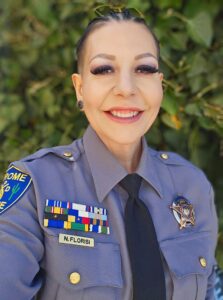
     Field Training Officers are the missing link in the resilience conversation. They shape how recruits think, talk, and perform under stress, yet they’re rarely given concrete tools to build psychological flexibility. Developing Psychological Kevlar gives FTOs skills they can immediately weave into daily coaching, scenarios, and debriefs.
Instructor Bio

     Nicole is the Director of Curriculum & Content Development, Staff Instructor at Force Science and has extensive experience as an educator, police officer, and therapist. She provides front-line instruction in de-escalation, crisis communications, and force encounters investigations. With over 25 years of experience, she has held positions including communications specialist, patrol officer, patrol sergeant, investigator, and acting chief. She has held previous roles as a Law Enforcement Subject Matter Expert at VirTra and as the Executive Director for the Verde Valley Sanctuary; a shelter dedicated to providing services for victims of sex trafficking, sexual violence, and domestic violence. Nicole is currently working on her doctorate in clinical psychology. She holds two post-master’s degrees; one in Human Factors Psychology and one in Trauma Counseling; an M.S. in Professional Counseling; and a B.S. in Public Safety Administration and Emergency Management. 


Course Description

     This course examines the psychological principles that separate effective training from mere supervision. Attendees will explore research-backed concepts, including psychological safety, cognitive load management, challenge vs. threat mindsets, and the neuroscience of learning under stress.

     Attendees will discover how their approach impacts trainee performance and learning outcomes. The course is designed to help participants examine their current training methods and develop actionable strategies for improved performance and retention. This is not theory for theory’s sake – it’s science applied to the street.

Instructor Bio

     Noel brings over twenty years of law enforcement experience spanning operational policing in the U.S. and U.K., specialized units, and leadership of large-scale training programs. His career began with the London Metropolitan Police in 2001 before transitioning to training leadership roles in the United States.

     As an Advanced Force Science Specialist, he integrates psychological research and behavioral science into practical law enforcement training. His expertise is recognized through memberships in ILEETA and the American Psychological Association, and his work has been published in Police1, the ILEETA Journal, and The Firearms Instructor. He delivers training across the country, applying evidence-based methodology that emphasizes effectiveness over tradition.

Course Description

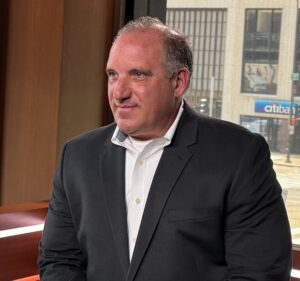
     The decisions made by the first responder can either make or break a sometimes sensitive internet/digital investigation. This overview conference break out of the 3 day program will address the supervision of a patrol response which is crucial in the handling of complaints and investigations related to internet based crimes, i.e. Fraud, Sexting, Cyberbullying, Sex Predators, Stalking, Revenge Porn, Computer Tampering This course equips law enforcement supervisors and Field Training Officers (FTO) with the knowledge and leadership skills to oversee patrol officers handling internet-related crimes. It covers digital evidence, investigative oversight, policy enforcement, interagency collaboration, liability concerns, and legal precedents.
Instructor Bio

     Detective Richard Wistocki (Ret.) had been a law enforcement officer for 30 years and 28 years with the Naperville Police Department. In his last 22 years as an Internet Crimes Investigator with the Naperville Police Department.   He has been a SWAT operator / Sniper for the past 22 years. He is one of the founding members and an affiliate member of the Illinois ICAC.  He is an instructor for the Department of Justice and various Law Enforcement Mobile Training Units and POST units across the United States. He is the creator of the Illinois Sexting Law, Swatting Law, Child Exploitation online and the new SRO mandatory Certification Law.  Rich is currently one of the cyber trainers for the National Association of School Resource Officers NASRO. He is currently serving as a Reserve Deputy Sheriff at the Putnam County Sheriff’s Office assisting in Cyber Investigations.

Course Description

     This course is designed for Field Training Supervisors and FTO program managers seeking a structured, modern approach to developing trainers who can effectively teach today’s officers, as well as FTOs who want to refine their approach and expand their instructional toolkit. Using a six-component Adaptive Field Training model, the course examines the essential elements of an effective FTO program: selecting and assigning adaptive trainers, applying leadership and mentorship principles, communicating with clarity and purpose, incorporating adult-learning strategies, teaching with instructional flexibility, and maintaining cultural alignment across the training unit.

     Rather than teaching specific techniques or step-by-step methods, this course provides a strategic overview of how each component contributes to an adaptable, high-functioning field training program. Participants will learn why these elements matter, how they interconnect, and where they can be implemented within their own agencies.

     This course helps field training supervisors build better training programs by giving them a structured model for selecting, developing, and supporting adaptive Field Training Officers. Supervisors will learn how to strengthen program consistency and coach their FTOs toward more effective teaching. The course is equally suited for current FTOs, who will learn training strategies that they can apply immediately in the field.

Instructor Bio

     Steve McNeill has worked in law enforcement training for 16 years, including nine years as a Field Training Officer. He has spent the last seven years as the department’s Field Training Coordinator, modernizing the field training program, and emphasizing adaptive instruction, effective communication, and adult-learning principles in one-on-one training. Steve teaches new FTOs using a practical, modern framework that strengthens both trainer performance and program consistency.

Course Description

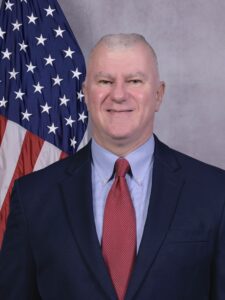
     Leading Through Example: The Everyday Influence of a Field Training Officer examines how Field Training Officers shape the character, competence, and culture of their organizations through everyday actions. This engaging session emphasizes that leadership is not defined by position, but by behavior, especially under pressure. Participants will explore the lasting impact of how FTOs communicate, model professionalism, and respond to ethical challenges in the field.

     Through discussion, reflection, and practical examples, attendees will identify the traits that build credibility, trust, and accountability with recruits and peers alike. The course reinforces the powerful truth that every decision, word, and action teaches something, intentionally or not, and challenges FTOs to lead in a way that others want to follow.
Instructor Bio

     Wayne is a retired law enforcement lieutenant with over 30 years of service and more than 25 years as an instructor at both the line and executive levels. His background includes field training officer, FTO Supervisor, Patrol Commander, Deputy District Commander and Training and Education Division Commander for the Gainesville Police Department, overseeing leadership development and field training for more than 300 sworn officers.

     He currently teaches with the International Association of Chiefs of Police (IACP) in the First-Line Leadership Program, Advanced Police Concepts as the lead instructor for FTO programs, and the Southwest Virginia Criminal Justice Training Academy. Through South Consulting LLC, he facilitates leadership, instructor development, performance coaching and field training courses nationwide.


Course Description

     Officers in the field frequently misunderstand, and therefore misapply, critical constitutional limitations on police authority. Misinformation can come from many sources, including training. In an effort to reduce liability and increase investigative effectiveness, this program provides FTOs with the proper constitutional principles, with citations to relevant federal caselaw, as they apply to ten commonly misunderstood constitutional topics. This information will allow FTOs to better deliver critical legal direction to trainees.

Instructor Bio

     Zach Miller is an experienced national police legal instructor and retired police officer. He is well-versed in all of the substantive and procedural aspects of pre-arraignment constitutional law and is highly-sought after for his training and advice on these matters, providing his expertise to officers and agencies in over 40 states since 2007. Since 2023, Zach has worked closely with Blue to Gold, a national training company specializing in search and seizure training.

This Year's Sponsors

Benchmark Analytics invites all NAFTO National Conference attendees to relax and enjoy themselves in the conference Hospitality Suite. Benchmark Analytics will provide the snacks and beverages. You bring good conversation and fun-loving spirit. This is a great opportunity to exchange coins, patches, stories, and good ideas! Thank you Benchmark Analytics for your support. 

NAFTO is proud to partner with Virtra to bring you the NAFTO Night-In. This  yearly event is open to all National Conference attendees and is always a good time! Our Night-In includes the annual Cornhole Tournament, snacks, drinks, and entertainment. NAFTO and Virtra invite you to join us Wednesday night, June 14th @ 7pm in the Sheraton Phoenix Downtown. Thank you Virtra for your support!

This Year's Fundraiser

NAFTO has been blessed to partner with Kim Schlau and the Uhl Sister Foundation this year to give us all an opportunity to support a very worthy cause. Kim and her foundation have a tragic, yet, amazing story and have played a crucial role in law enforcement training for years. Come meet Kim, hear her story, buy some raffle tickets, and possibly win a bottle of bourbon!

Don’t forget, there’s still time to submit applications for Master Field Training Officer and nominations for Field Training Officer of the Year. All applications and nominations must be received by April 15th, 2025. Master Field Training Officer certification costs your agency nothing and is a great way to recognize the hard work and dedication of your department’s Field Training Officers.

2026 National Conference Itinerary

Cost savings considerations at this year’s conference:

  • The hotel is a 10-minute ride from San Antonio International Airport, with many direct flight options from around the country.
    ● 6 meals provided for reduced Per Diem.
    ● Located in the heart of downtown San Antonio, right on the Riverwalk, with numerous dining and entertainment options within walking distance.
    18 breakout session class options, and 4 general sessions
    presentations over 3 full days of training.